


Scattered on floppy disks and hard drives around the world, there may be millions of works of art created on now-archaic computer systems. Most of these are personal treasures, perhaps of value only to their creators or to their immediate circle of friends and family. Some computer art is of interest to researchers as an example of the progression of artistic tools that were used at a given time. Still others are just bad art, best forgotten.
What happens when a major figure in the art world has created works on a system that is decades-old and whose images are stored on potentially unreadable media? That was exactly the problem that faced a team of student researchers, curators, and perhaps most significantly, artist Cory Arcangel, in relation to the files created by the legendary Pop Artist Andy Warhol on the Amiga.
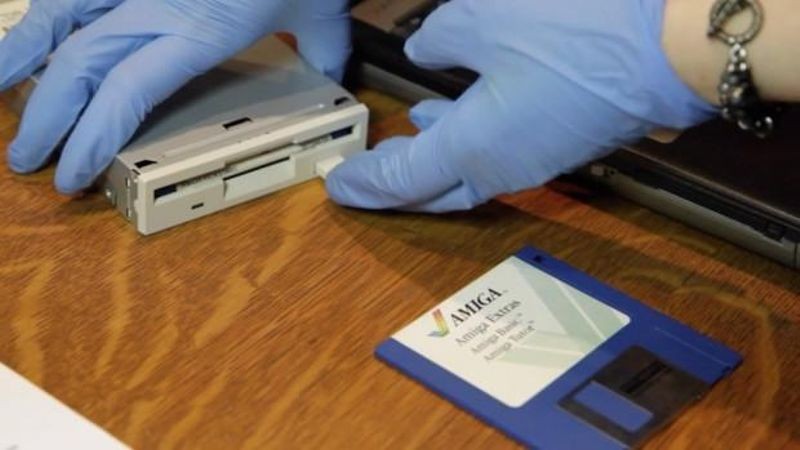
One of the forty-one disks disks containing Andy Warhol鈥檚 Amiga files
Cory Arcangel describes himself as an 鈥楢colyte of Andy Warhol.鈥� 鈥淏etween DuChamp and Warhol, those are the two big influences for the kind of art I make,鈥� says Arcangel. Arcangel鈥檚 works span both physical and digital realms, as well as static and moving pieces, much like Warhol鈥檚 own works. Videos such as A couple of thousand short films about Glenn Gould and Sans Simon, as well as web-based works like Punk Rock 101, and even Nintendo cartridge hacks like Super Mario Clouds, make arcangel a multi-dimensional artist whose works can be seen as inhabiting areas that Warhol himself likely would have waded into had he not died in 1987.
Arcangel noted Warhol鈥檚 influence, 鈥溾�hen I first moved to New York and started becoming an artist, you know, I read his diaries, and for me, they were really helpful because they taught me, in a way, how to be an artist. Not in the poetic sense, but in the day-to-day sense, like 鈥業 went to work today. I made three paintings. Then I went to an opening.鈥� like a real kind of 鈥榯his is what you do if you鈥檙e an artist. The life of an artist鈥欌��
Warhol鈥檚 interaction with the Amiga started with the introduction of the Amiga 1000 computer in 1985. He took part in a launch event at New York鈥檚 Lincoln Center, creating a piece of very Warholian art, using a scanned image of Debbie Harry of the New Wave act Blondie. 鈥淚鈥檓 going to do this 鈥楬ow to Paint鈥� thing that this computer company wants me to do,鈥� Warhol noted in his diaries. It was a video of the event uploaded to YouTube, along with the mention in the Warhol diaries, that caught the attention of arcangel, who has used obsolete technology in many of his works. He became interested in Warhol鈥檚 work with the Amiga, in particular, whether any of Warhol鈥檚 floppy disks had survived. He contacted the Andy Warhol Museum in Pittsburgh in a quest to find out more about the condition of Warhol鈥檚 Amiga works and equipment.
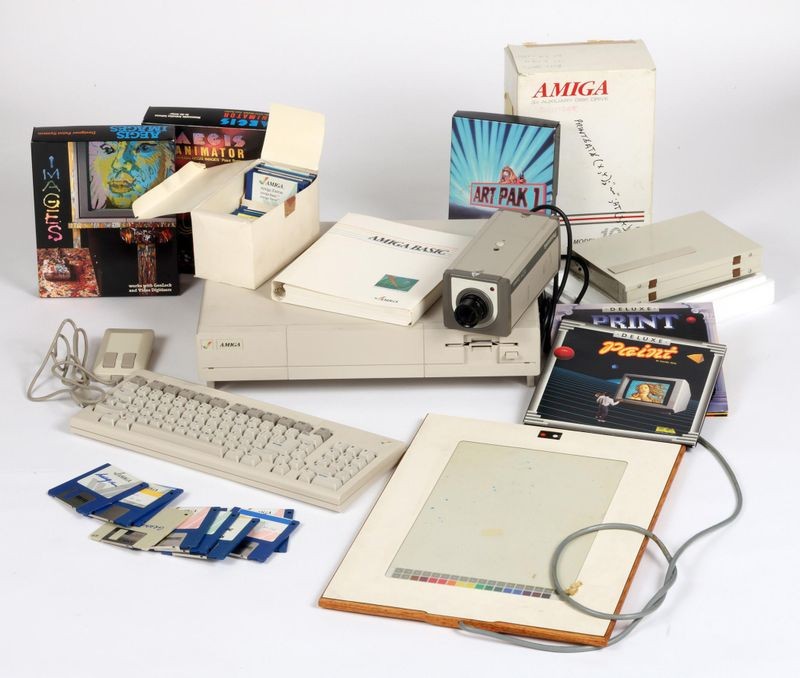
Commodore Amiga computer equipment used by Andy Warhol 1985-86
Warhol was given at least one full Amiga 1000 system with a drawing pad, camera, and various pieces of drawing software. He created several works on the Amiga, often using familiar subjects such as Marilyn Monroe and Campbell鈥檚 soup cans, but giving them a new sensibility harnessing the techniques that the Amiga provided. Using the GraphiCraft painting system and other software, for example, Warhol created images that emulated techniques similar to his silkscreen creations of the 1960s, such as bright colors layered over black and white photos of celebrities and newspaper photos.
After his death, Warhol鈥檚 works, as well as a great deal of other material, eventually went to the Andy Warhol Museum in Pittsburgh. Commenting on this massive amount of material, Arcangel told Themed for Your Pleasure podcast host Vanessa Applegate, 鈥淲arhol was a hoarder. A maximum, a hundred and twenty percent hoarder, so the amount of material that the Warhol Museum has is mind-boggling.鈥� This led to much of the material being little examined; not lost, but over-looked among hundreds and thousands of other items relating to Warhol鈥檚 life and art.
鈥淭he (Warhol) museum has so much stuff, they鈥檙e still going through it.鈥� Arcangel noted. Among the items were 41 floppy disks, Warhol used to store the works he created on the Amiga. These disks contained many pieces, and while Museum archivist Matt Wrbican knew of their existence, no attempt had been made to read the disks or recover the images.
Wrbican noted, 鈥淩eally, we didn鈥檛 have any clue what was on the disks. At that point, I only knew of two images that Warhol had made (on the Amiga). I assumed there were lots of other images because Andy鈥檚 assistant Jay (Shriver) told me that he had played around with the images for a while, but exactly what those images were I had no idea.鈥�
The two images Wrbican had seen, the Debby Harry photo manipulation done at the Amiga Launch and a self-portrait created for the cover of Amiga World Magazine, were widely-known, but no one was certain about the contents of the disks the museum held.鈥漈hey were as well taken-care of as they could be. They were in incredible shape,鈥� arcangel noted.
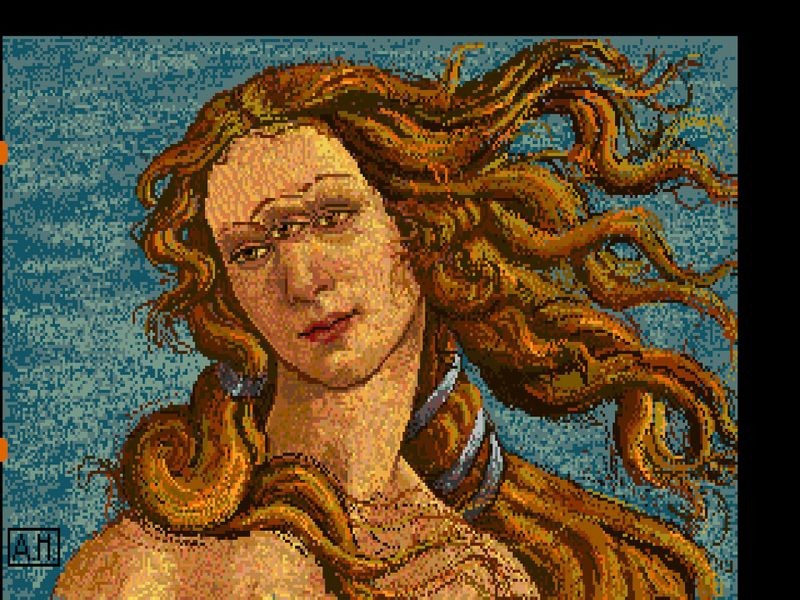
Andy Warhol, Venus, 1985, 漏The Andy Warhol Foundation for the Visual Arts, Inc.
In 2011, Arcangel connected with the Carnegie Mellon University Computer Club, known for a great many retro-technology feats. Working with Arcangel, Wrbican and others, members of the club began reading the disks, using the best digital archival practices. The Kryoflux, an interface that allowed them to read disks from the Amiga and bring the files into a modern PC, way key. One rule was that each disk should only be handled and read only once. 鈥淭hey were like 鈥榳e need to do it with the Kryoflux. We need to do it at the lowest level. They were the people pushing, making sure everything was at a very high level, [an] archival preservation project. I can鈥檛 say enough nice things about the Carnegie Computer Club,鈥� arcangel said, 鈥渢here is nothing cooler than a retro-computing hacking club in my mind! Especially at a place like Carnegie Mellon.鈥�
By the end of 2013, the club had read all of the disks and began working on recovering the individual files using emulators running on modern PCs. The recovered images were definitely Warhol creations, and while rather small by today鈥檚 standards (200 x 300 pixels), they show Warhol鈥檚 famous style. Using techniques and tools like the paint bucket and fill, he created images that felt like the silkscreened photograph-based works that have become beloved and highly collectable in the years since. A self-portrait, called Andy 2, features a photo of Warhol that has had fields of textured color layered over it. The effect is right in line with his self-portraits of the 1960s and 70s. 鈥溾�hey were really amazing,鈥� arcangel says. 鈥淭here鈥檚 one of Marilyn Monroe that he had sort of splashed all over鈥� Fantastic!鈥� and 鈥渉e couldn鈥檛 have done any better.鈥�
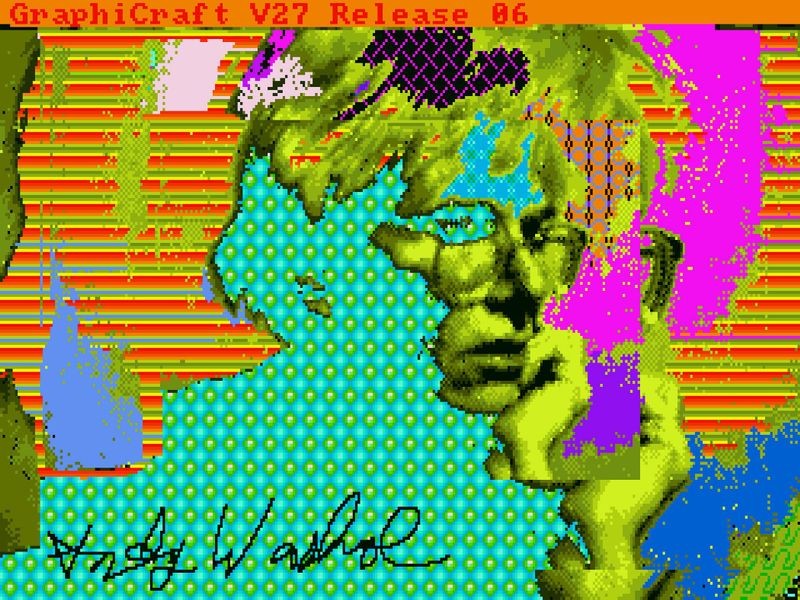
Andy Warhol, Andy 2, 1985, 漏The Andy Warhol Foundation for the Visual Arts, Inc.
Not all of the pieces recovered were intended to be artworks. Some were test pieces used to discover the capabilities of the Amiga. In much the same way a painter may hone brush technique through practice on works never intended to see the light of day, Warhol apparently created similar images to allow himself to experiment with the Amiga environment.
arcangel commented, 鈥渨hat is amazing to me is that he seemed to get it really quick, really quick鈥� how to work with the computer, and how to work with the paint bucket. You can see a couple of them where he鈥檚 trying to learn the copy/paste [function] and he鈥檚 learning to use the paint bucket, and then all of a sudden, there are a couple that are just amazing.鈥�
He also created images from scratch, including a Campbell鈥檚 soup can鈥搕he iconic image of his days as Pop Art鈥檚 leading practitioner and art world Bad Boy. The mainstream art establishment had been slowly embracing works done with the aid of computers since the 1960s, but these works were created with large computers鈥攊ncluding mainframes and supercomputers. Steve Jobs had made it something of a mission to bring the Macintosh to artists. The artist Keith Haring had been introduced to the Apple Macintosh computer at the same time as Warhol, but integrated it into his work much more. Graphic artists had also gravitated towards the Mac, but the Amiga was billed as a 鈥楳ulti-Media Computer,鈥� and that may have drawn Warhol towards it.鈥淭he thing that I like most about doing art on the computer is that it looks like my work.鈥� Warhol once said.
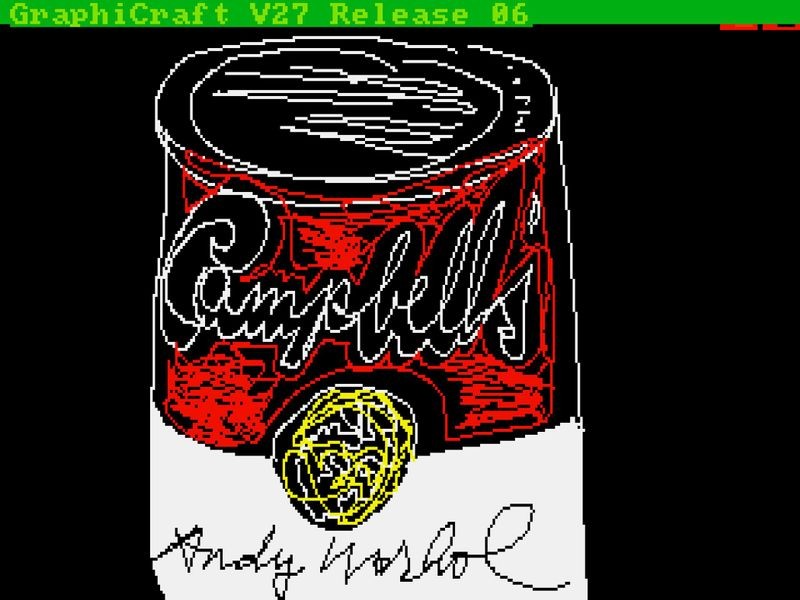
Andy Warhol, Campbell鈥檚, 1985, 漏The Andy Warhol Foundation for the Visual Arts, Inc.
Arcangel鈥檚 passion for the project, the skill and technological know-how of the CMU Computer Club, and the background of the archivists and curators at the Andy Warhol Museum, all led to the extraction of twenty images. The disks, along with Andy鈥檚 Amiga 1000 computer, his software, graphics tablet, camera鈥揳s well as the images that the Carnegie Mellon Computer Club extracted from the disks鈥揳re in the permanent collection of the Andy Warhol Museum in Pittsburgh. A documentary, The Invisible Photograph: Part II (Trapped), chronicles the interactions between the Warhol Museum, the CMU Computer Club, and Arcangel, as well as the Warhol-Harry portion of the Amiga product launch. These materials show how one of the most significant artists of the 20th century expressed his artistic vision using one of the most important tools ever created, the computer. They also represent some of Warhol鈥檚 final art pieces, created over the last eighteen months of his life.