


I鈥檓 often asked if there were one object in the entire world that the museum could acquire, what would it be? It鈥檚 a tough question, there are seminal machines that would be amazing to include in the collection, such as John Von Neumann鈥檚 IAS Machine (currently in the collection of the Smithsonian) or the Russian BESM-6 supercomputer. But in my heart, there鈥檚 one piece that I have searched for tirelessly which would be outstanding to have: The SynthAxe, a specialized musical instrument controlled by computer through the Musical Instrument Digital Interface (MIDI).
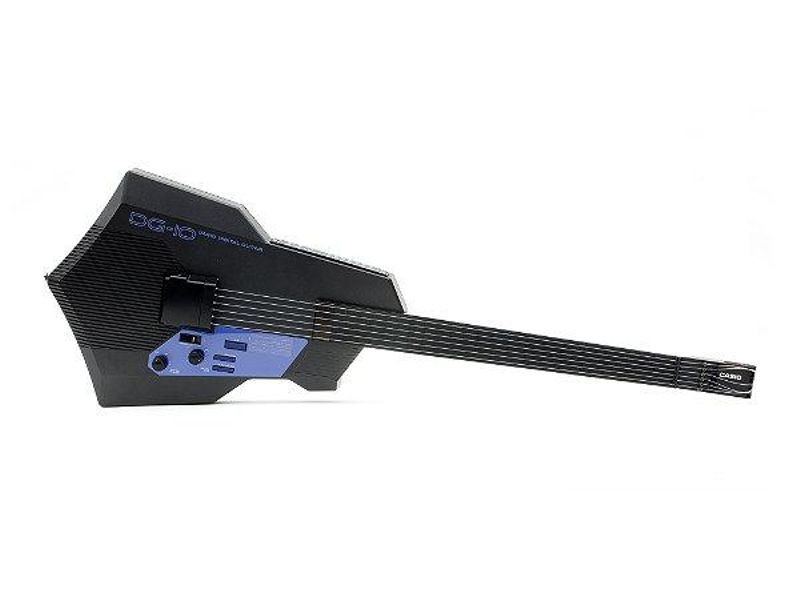
Casio DG-10 featured in Revolution: The First 2000 Years of Computing
MIDI-controlled instruments often looked like traditional musical instruments, but required synthesizers or computers to be played. Piano-like controllers, such as the Sequential Circuits Inc. MusicMate keyboard were popular, as were various forms of drum pads. Controllers that mimicked the guitar also came to market, such as the Casio DG-20.
The early controllers tended to have a traditional musical instrument interface which allowed musicians to quickly learn to use the new controllers. It wasn鈥檛 until the rise of MIDI-controllers, however, that we started to see new and different shapes for instruments. And one of the most innovative was the SynthAxe.
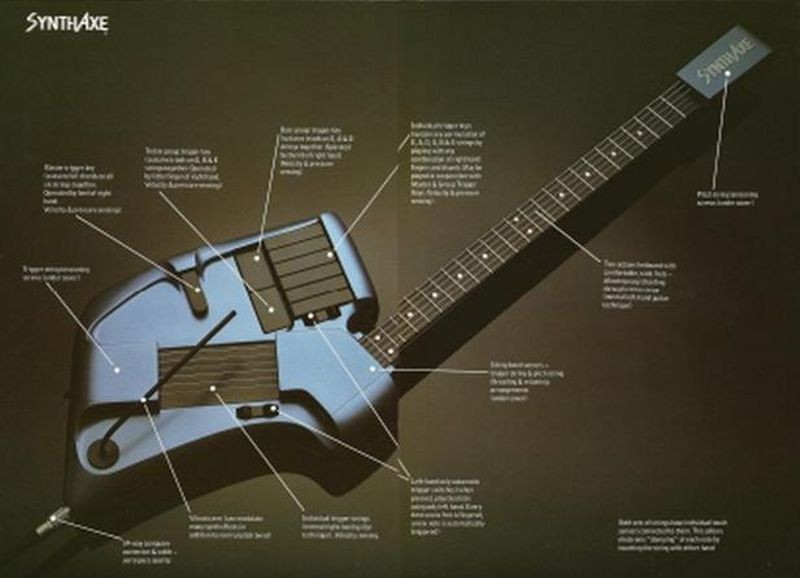
The SynthAxe initially sold for ten thousand pounds in 1985.
English designer Bill Aitkin, came up with the SynthAxe concept in the late 1970s, long before MIDI. The idea wasn鈥檛 to build a new kind of guitar, but to come up with an entirely new type of instrument altogether. In a 1985 interview with Guitarist, Aitkin said 鈥淭hat is the point, it鈥檚 not a guitar.鈥� While you can see that it is in the guitar family, the Synthaxe looks significantly different. The fretboard, or neck, of the SynthAxe is angled upwards from the body, giving it a sort of 鈥榗heckmark鈥� shape. There are actually two sets of strings: those over the fretboard and a second, separate set further down the body. There are a set of 9 keys on the body that could be assigned notes. A tremolo bar could be used as a 鈥榳hammy鈥� bar to vary the pitch of the notes played. 鈥淧eople who pick up the SynthAxe and expect to play their Strat and Gibson licks on it are in for a big disappointment鈥� Aitkin said.
Traditional guitars create their sound by the vibration of their strings, using the fretboard on the neck to determine the note being played. The MIDI guitars of the day took the vibration of the strings and converted that into MIDI data using a microprocessor, a process that is often slow and inexact, giving a sort of delay to the sounds produced. This isn鈥檛 bad for recorded music, but for a live performance, it can make things quite challenging. With controllers, you didn鈥檛 necessarily have to rely on the vibration of the strings to create sounds, which could lead to innovation in new directions. In the case of the SynthAxe, the strings act as a trigger, and the fretboard is continuously scanned to determine the tone being played, as well as any pitch bending or other effects.
A Demonstration of the SynthAxe featuring SynthAxe Demo with Allan Holdsworth, Lee Ritenour and Neville Martin
The SynthAxe is only a controller, since the signals from the device are sent to a synthesizer or computer which produces the actual sounds. This technique allows for different tones and sampled sounds to be assigned to each key or fret. 鈥淲hat you鈥檝e got to do, if you鈥檙e interested in synthesis,鈥� Aitkin said in Guitarist, 鈥渋s sit down with the SynthAxe and give it at least an hour. What you find is this: unlike a lot of so-called guitar synthesizers, where the more you get into them, the more you realize their limitations, with the SynthAxe you instantly recognize some of the limitations, but the more you adapt, the more you realize that there鈥檚 a whole world there waiting for you to get into.鈥�
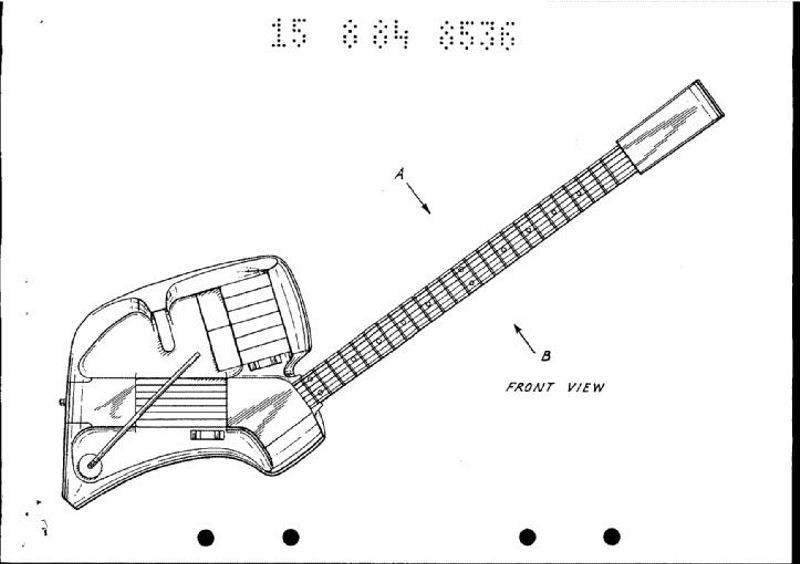
SynthAxe design drawing, ca 1984
The SynthAxe had a great deal of flexibility, which attracted adventurous musicians to adopt the instrument. Perhaps the first major musician to come to SynthAxe was Allan Holdsworth. Holdsworth was well-respected in the world of jazz-rock fusion and a renowned guitarist. Holdsworth and Aitkins met at the National Association of Music Merchants (NAMM) convention in Los Angeles. Here, Holdsworth first played with the SynthAxe. Aitkin noted, 鈥淗e came down, had a look and his reaction was pretty positive 鈥� after a couple of hours鈥� rehearsal, he blew an amazing number. It was great!鈥�
Holdsworth had been experimenting with a twin-necked guitar that would allow him to have two different tunings on the same instrument. After playing the SynthAxe, Holdsworth said, 鈥溾� was so knocked out with it, because I didn鈥檛 need two necks any more.鈥�
Aitkin and company allowed several people to play the SynthAxe at NAMM. Several other early adopters included noted guitarists such as Al Di Meola and Lee Ritenour, who recorded the 1986 album Earth Run using the SynthAxe. In fact, he鈥檚 shown holding one on the record sleeve!
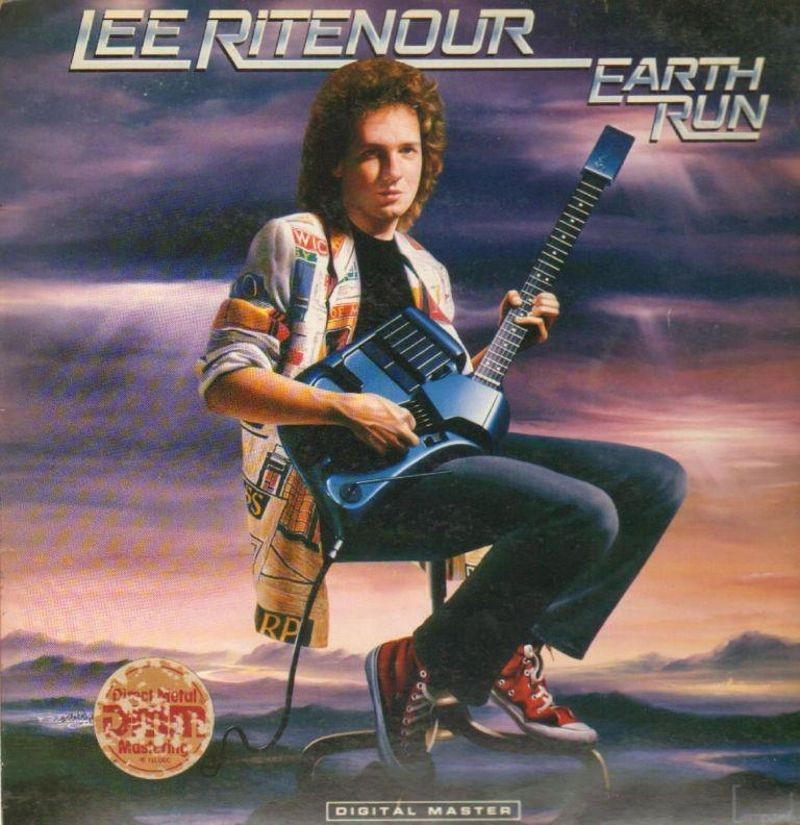
Lee Ritenour holding a SynthAxe on the cover of his album, Earth Run
One of the main difficulties with the SynthAxe was the spacing of the frets. On traditional guitars, the frets are spaced differently, with the frets closer together at the top of the neck. The SynthAxe鈥檚 frets are almost all evenly spaced, meaning that it鈥檚 harder to form chords in the higher registers. 鈥淲ell, the logic behind it was that because the positions of the frets were not musically relevant any more, we were able to look at the conventional guitar fingerboard and see if there were any areas, as far as playability was concerned, which could be improved.鈥� This did have an effect on Holdsworth who said, 鈥淚 just couldn鈥檛 play some of the chords that I normally play on the guitar, because the frets were just too wide apart at the top of the neck. It鈥檚 not really a problem, though, because it will eventually be solved.鈥�
The SynthAxe could do many things that regular instruments couldn鈥檛 do, due to the combination of hardware design and novel software. 鈥淲e analyzed every single parameter like pitch, dynamics, sustain and all of them are independently under software control.鈥� Aitkin said, 鈥淚f you bend a guitar string halfway across the fingerboard, it will raise the pitch by a tone or maybe three semitones. On the SynthAxe you can make it anything you like 鈥� it could be an octave if you like鈥�
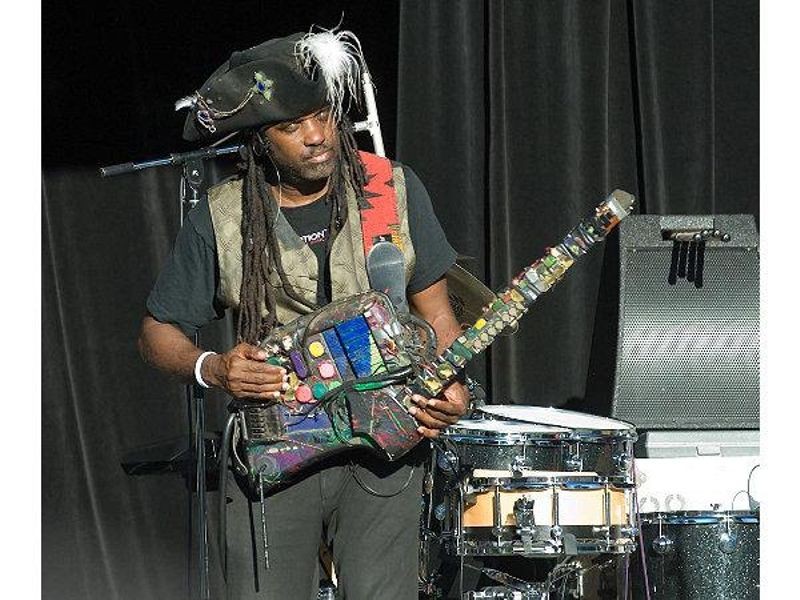
Roy 鈥淔utureman鈥� Wooten of Bela Fleck & The Flecktones, playing his Drumitar; a heavily-modified SynthAxe
No one took experimentation further than Roy Wooten, aka Futureman. Futureman, who plays with the Jazz act Bela Fleck & The Flecktones, was given one of Rittenour鈥檚 old SynthAxes. Over a period of time, he began modifying it into an almost entirely new instrument: the SynthAxe Drumitar. This system, which replaced the strings as the primary triggering mechanism, allowed Wooten to play the 鈥榙rums鈥� using the guitar-like device. This gave him great flexibility in his playing, allowing him to devise new sounds and tonal approaches to playing the instrument.
Many musicians recorded using a SynthAxe, though only about 100 were made. Part of the reason for that was the price tag: ten thousand UK pounds; about thirteen thousand US dollars at the time. That put the instrument outside the reach of all the but the most well-heeled musicians. In addition to the hefty price tag, they were hard for even experienced players to play, and they were delicate.
While the SynthAxe did not have a major impact on the mainstream music industry, it was a fascinating sidebar in the history of MIDI and electronic music, and an excellent example of the effect of a musician working with a technologist. Allan Holdsworth鈥檚 work with the SynthAxe was essential to the system, and very much influenced how Aitkin and his colleagues worked on designing and upgrading the system, finally getting to see an actual musician playing the instrument.
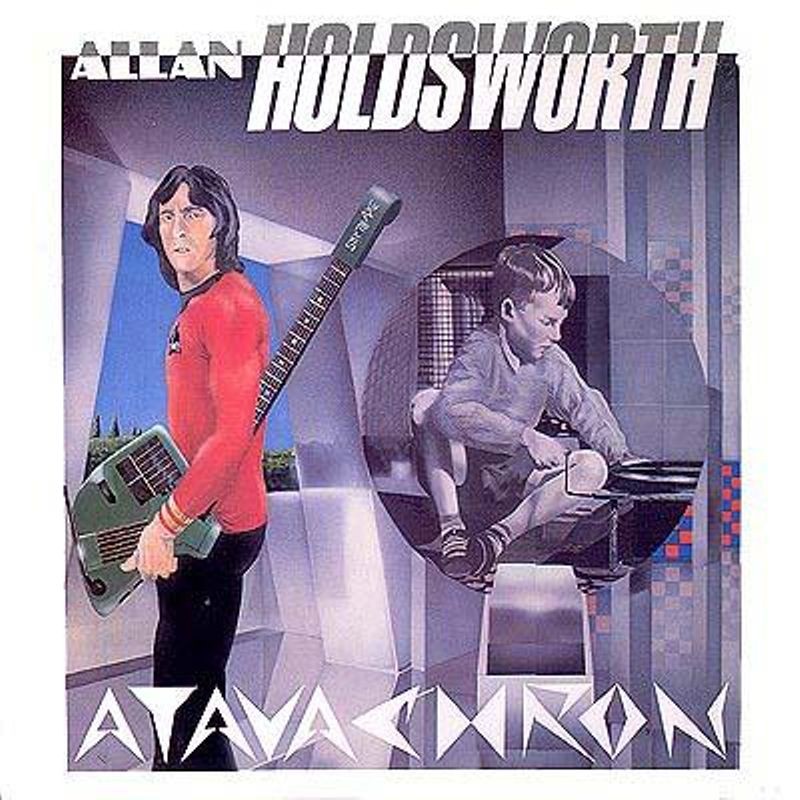
Allan Holdsworth was one of the most visible supporters of the SynthAxe, including playing it on his album Atavachron
Of the collaboration with Allan Holdsworth, Bill Aitkin said: 鈥淲hen I saw Allan play it for the first time on stage I can tell you it was a really strange feeling. I mean, it was 1977 when I first started thinking that I wanted to do something like this, and eight years is a very long gestation period. To see somebody actually doing it- wow! It鈥檚 an emotion that I鈥檝e never felt before, and the only thing I can say is that it鈥檚 similar to is watching my wife have a baby 鈥� that鈥檚 really true 鈥� I鈥檝e got three children, one鈥檚 called Paul, one鈥檚 called Lindsay and the other鈥檚 called SynthAxe! Allan was the midwife!鈥�